

Build a Portable CO-RE eBPF Loader With Libbpf
Trace a CO-RE eBPF program from BTF generation and Clang compilation through libbpf skeleton loading, verifier logs, attachment, and cleanup.
Trace a CO-RE eBPF program from BTF generation and Clang compilation through libbpf skeleton loading, verifier logs, attachment, and cleanup.

CONFIG_BPF_SYSCALL compiles the bpf() syscall into your kernel, the single entry point every eBPF program load and firewall rule requires to work.

Run the kernel verifier off-device during CI to catch eBPF rejections early. Learn verifier basics, log reading, BTF fixes, and troubleshooting methods.
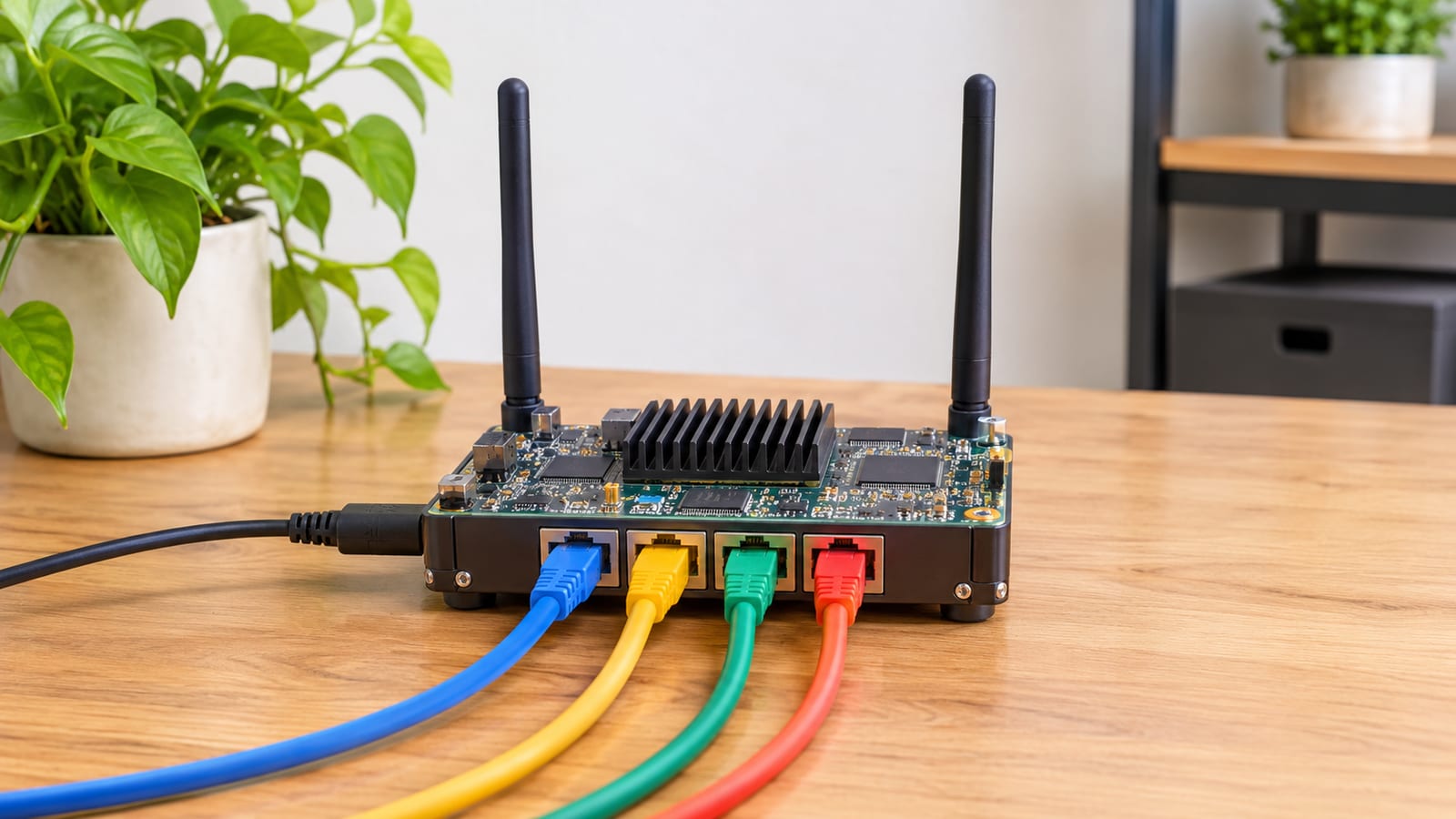
OpenWrt eBPF works best for tracing and narrow packet policy. Match kernel config, headers, architecture, hooks, and verifier output before deployment.
A focused eBPF trace starts with logs and strace, then uses the right hook, attribution fields, and verifier-safe code to answer one question.
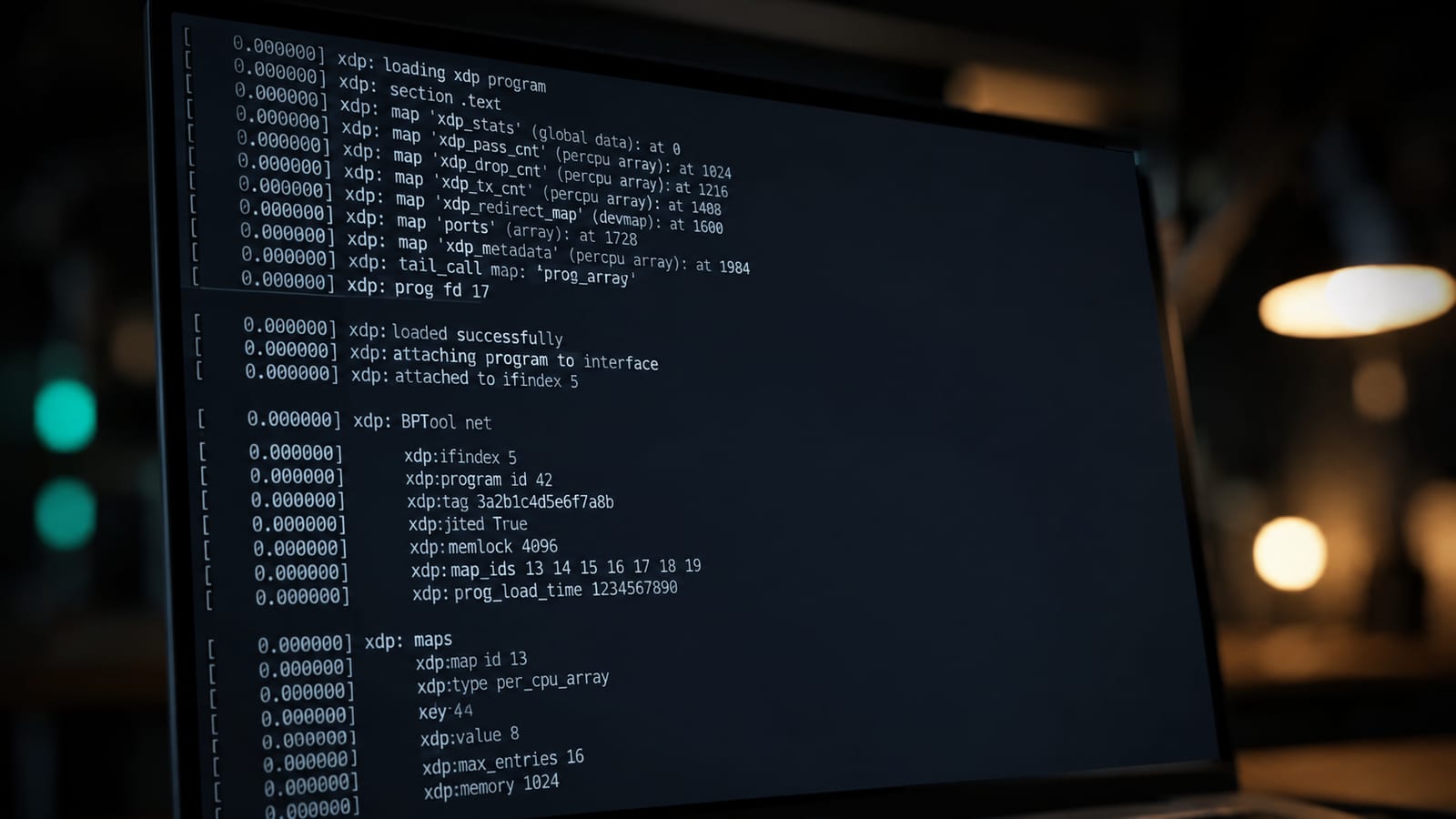
Load and attach XDP programs to network interfaces using bpftool and ip link pinned syntax. Master the two-step process: pin first, then attach to eth0.

eBPF can steer L4 traffic in the kernel without a proxy, but the right hook, return path and flow-state maps determine whether forwarding works reliably.
Most probe shell failures come from a mismatched process, account, or environment. Trace execve, logs, paths, and integration to isolate the real cause.
bpffs mount requires CAP_SYS_ADMIN for both the mount and bpf() syscall. Learn how to diagnose failures, make mounts persistent, and secure pins across reboots.

XDP offload runs eBPF on the NIC, but support is rare. Check drivers, attachment modes, verifier errors, and AF_XDP limits before trusting hardware claims.
BCC compiles eBPF C at runtime for deep Linux kernel tracing. Learn when to use BCC versus CO-RE, which tools solve real problems, and how to write safe probes.

Katran forwards packets at the NIC receive path using eBPF and XDP, eliminating userspace overhead and lock contention to hold at Facebook scale.
